In the museum and heritage world, the visit experience is no longer limited to simply observing the objects on display: interactive visitor tools play a central role, and each device — audio guide, multimedia guide, S-Guide or Audiopen — requires a specific approach to content production.
The S-Guide: audio immersion and 3D sound trails
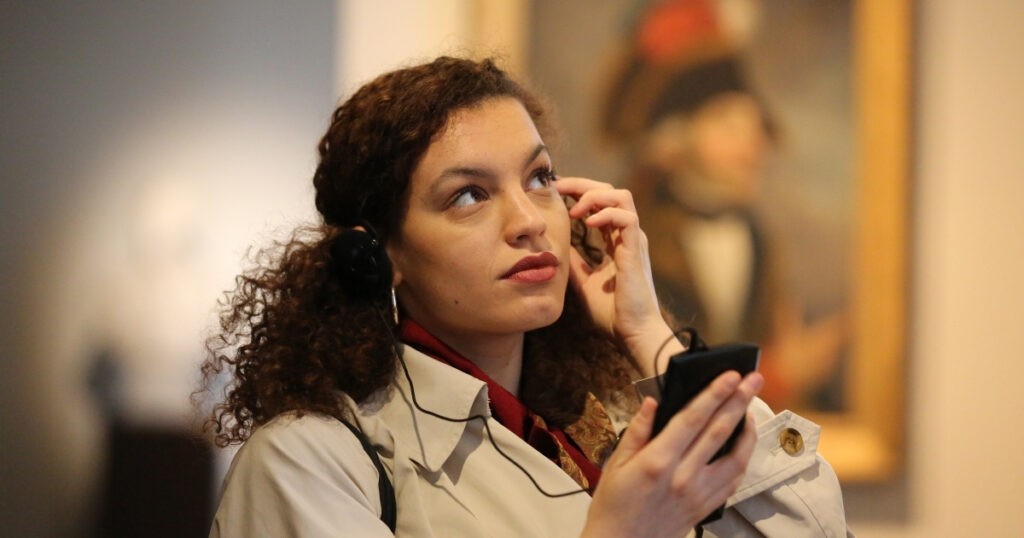
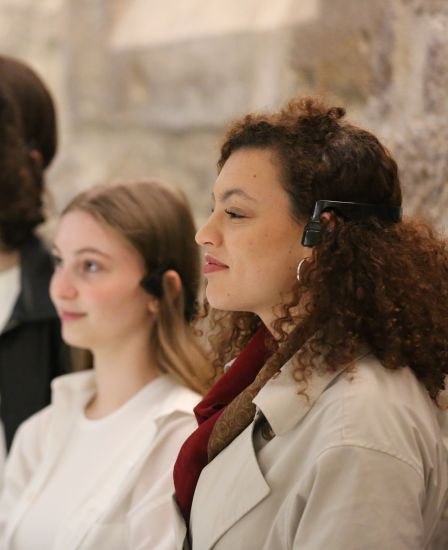
For devices such as the S-Guide, fully automatic audio headsets, content production focuses on immersive sound. This type of tool makes it possible to create a 3D sound trail, plunging the visitor into the heart of the story through:
- realistic sound effects and spatialized audio;
- complete sound staging that transports the visitor into the atmosphere of the exhibition;
- a smooth, automatic experience, with no manual intervention.
The S-Guide is ideal for turning the visit into a sensory experience, where audio becomes the main vehicle of emotion and information, reinforcing attention and memorization.
The multimedia guide: balancing audio and visual
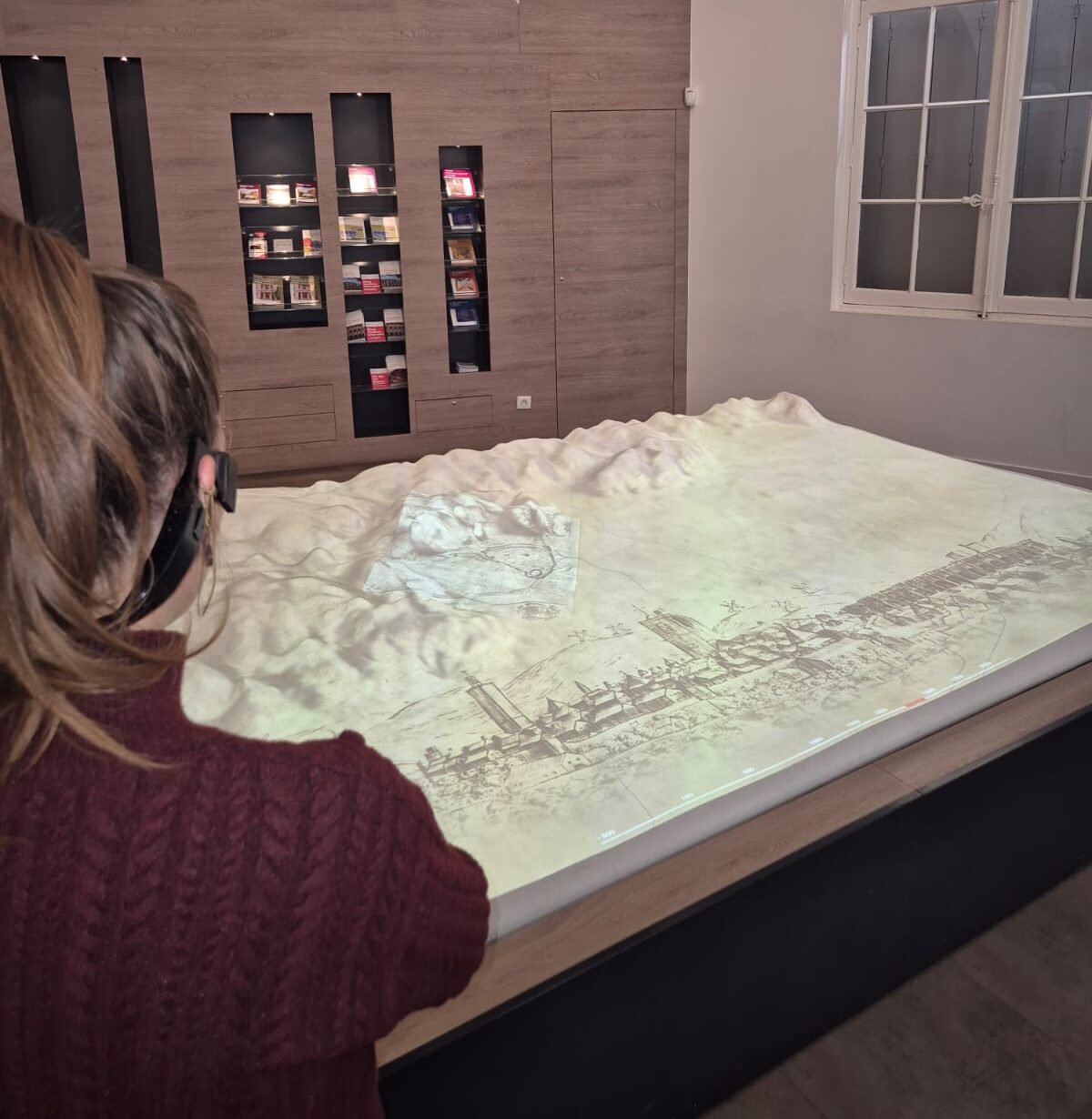
For multimedia guides, production must integrate audiovisual content. The audio is no longer limited to narration: it complements the visual journey with images, videos or animations played on the device. The strategy consists of synchronizing sound with visual content, creating a multimodal experience where information is read and heard simultaneously, and adapting the tone and length of the content so that it is educational and engaging.
The Audiopen and the A-Guide: from playful to classic
The Audiopen is designed for young audiences or visitors seeking a more playful approach: interactive quizzes throughout the route, treasure hunts or educational mini-games, and a creative, fun editorial line suited to children and families. The tour becomes an educational adventure in which the visitor plays an active role in their own discovery.
The A-Guide, or traditional audio guide, remains the tool of choice for delivering a high-quality audio experience. Its simplicity and streamlined interface allow visits that are accessible to all audiences, audio content built on storytelling, dialogue or immersion in a historical point of view, and a practical, smooth experience for large groups and individual visitors alike. It adapts to different formats: neutral and educational, lively and interactive, or immersive and historical.
Linearity, autonomy and wayfinding through sound
The visitor device determines the linearity of the route and the visitor's degree of autonomy. Depending on whether content triggering is automatic, semi-automatic or manual, the visitor either follows a guided route or freely explores the content that interests them.
With technologies such as the S-Guide or mobile apps connected to beacons, audio can also serve as a guide through space: content triggers as visitors approach an object, and audio cues orient them through complex routes. Sound thus becomes an innovative, immersive wayfinding tool.
Conclusion: a visitor-centred strategy
There are no strict boundaries: all forms of audio can be combined with different visitor devices. The key lies in understanding the needs of the site and its visitors, and adapting the content to the chosen tool. Whether it is a 3D sound trail, an interactive quiz or a classic audio guide, innovation lies in the intelligent combination of content and technology, offering a unique and engaging experience to every visitor.
Tell us about your project: our creative team is here to guide and advise you
Contact us