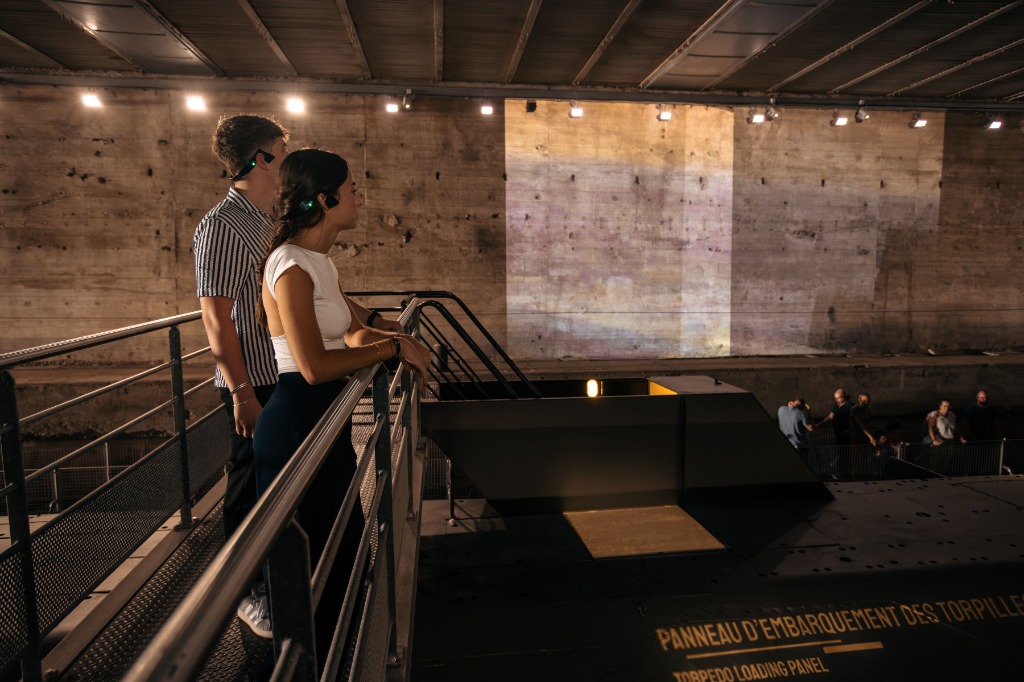
Audio guides have transformed the way we explore museums and cultural institutions, combining technology and culture to enrich the visitor experience. Following a survey of its partners, Sycomore has classified expectations of audio guide systems into three key categories: practical, educational and experiential.
The practical aspects of audio guiding
The audio guide offers a practical solution for visitors who prefer self-guided tours. Unlike group guided tours, which are often limited in availability and flexibility, it allows for personalised exploration: visitors decide the length and pace of their visit, a valuable advantage for those with time constraints or who wish to explore certain aspects of the exhibitions in greater depth.
Another practical benefit: the centralisation of information. Audio guides bring together all the necessary information about the exhibitions, reducing the need for explanatory panels, labels and other physical media. Space is freed up, visual clutter is reduced, and the works remain the centre of attention.
Finally, modern audio guides adapt to visitors' specific needs, with features for the visually impaired or guides in sign language, helping to make visits more inclusive.
The educational dimension
Cultural institutions implement audio guide systems primarily for their educational dimension. They guide visitors' gaze, put the works in context and enrich understanding through detailed explanations. According to our survey, some museums regard the audio guide as an essential element of the visitor journey, offering immersion in a new world.
The audio guide also actively engages visitors by incorporating interactive elements such as quizzes or games, which reinforce the assimilation of information. This interactivity is crucial for capturing attention, particularly among younger visitors. By explaining complex concepts in an accessible way, with language adapted to different levels of knowledge, the audio guide makes content accessible to a wide audience.
The experiential aspect
The audio guide does more than provide information: it enriches the visit experience. Modern devices incorporate innovative elements, such as augmented reality or sound reconstructions, which offer a new and captivating perspective on the exhibitions.
Cultural institutions also seek to bring a poetic and immersive touch to the visit, with narrative storytelling that stirs emotions and sparks the imagination. Today, the audio guide is seen not only as an interpretation tool but also as an object of interest in its own right, one that contributes to promoting a museum or remarkable site and must be attractive and innovative to encourage visitors to use it.
The challenges of audio guiding
Three major challenges stand out:
- Delivering quality content: content must be well documented, captivating and adapted to different visitor profiles, with accurate and relevant information presented in an engaging way.
- Achieving seamless technological integration: the audio guide must blend harmoniously into the overall experience without disrupting direct interaction with the works, and remain easy to use, intuitive and compatible with the infrastructure of cultural sites.
- Evolving continuously: to remain relevant, audio guide systems must incorporate the latest technological innovations and regularly update content and technology in order to sustain visitors' interest.
The audio guide thus plays a crucial role in cultural interpretation. At Sycomore, we are proud to contribute to this evolution by developing audio guide systems that meet the diverse needs of cultural institutions and their visitors.
Tell us about your project: our creative team is here to guide and advise you
Contact us